Birds & Science >
Important Bird Areas Program
A Global Currency for Bird Conservation
Background
As the U.S. Partner for BirdLife International, the National Audubon Society is working to identify a network of sites that provide critical habitat for birds. This effort, known as the Important Bird Areas (IBA) Program, recognizes that habitat loss and fragmentation are the most serious threats facing populations of birds across North America and around the world. By working through partnerships, principally the North American Bird Conservation Initiative, to identify those places that are critical to birds during some part of their life cycle, we hope to minimize the effects that habitat loss and degradation have on bird populations. Unless we can slow the rapid destruction and degradation of habitat, populations of many birds may decline to dangerously low levels. The IBA program is a global effort to identify areas that are most important for maintaining bird populations, and it focuses conservation efforts at protecting these sites.
What is an IBA?
IBAs are sites that provide essential habitat for one or more species of bird. IBAs include sites for breeding, wintering, and/or migrating birds. IBAs may be a few acres or thousands of acres, but usually they are discrete sites that stand out from the surrounding landscape. IBAs may include public or private lands, or both, and they may be protected or unprotected.
To qualify as an IBA, sites must satisfy at least one of the following criteria. The site must support:
- species of conservation concern (e.g. threatened and endangered species);
- restricted-ranges species (species vulnerable because they are not widely distributed);
- species that are vulnerable because their populations are concentrated in one general habitat type or biome;
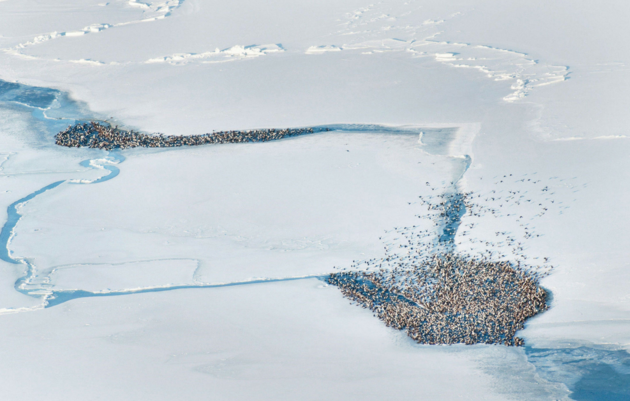
- species, or groups of similar species (such as waterfowl or shorebirds), that are vulnerable because they occur at high densities due to their congregatory behavior.
Identification of a site as an IBA indicates its unique importance for birds. Nonetheless, some IBAs are of greater significance than others. A site may be globally important, or important at the continental or state level. The IBA identification process provides a data-driven means for cataloging the most important sites for birds throughout the country and the world.
What is the status of the IBA program?
BirdLife International is a global coalition of more than 100 country partner organizations. The IBA program was initiated by BirdLife International in Europe in the 1980’s. Since then, more than 3,600 sites in 51 European countries have been identified as IBAs, with a total acreage covering 7% of Europe. Hundreds of these sites and millions of acres have received better protection as a result of the IBA Program. Today, IBAs are being identified in 156 countries around the world.
The National Audubon Society launched its IBA initiative in the U.S. in 1995, establishing program’s state by state. State-based IBA programs provide conservation leaders with the flexibility to tailor the program to their State’s needs, and they also give Audubon members and local volunteers the greatest opportunities to protect sites in their communities. To date, 46 states have initiated IBA programs and more than 1500 IBAs have already been identified in the U.S.
IMPORTANT BIRD AREAS IN ALASKA
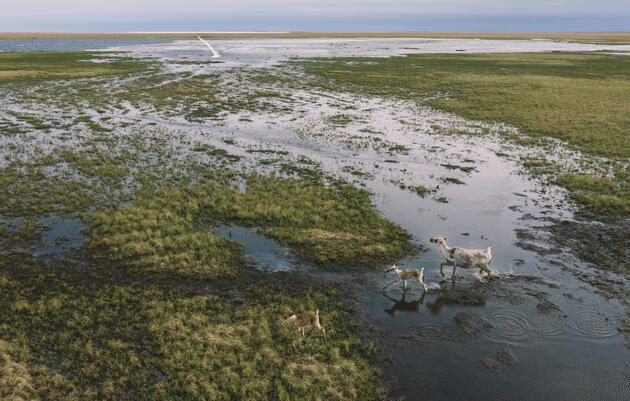
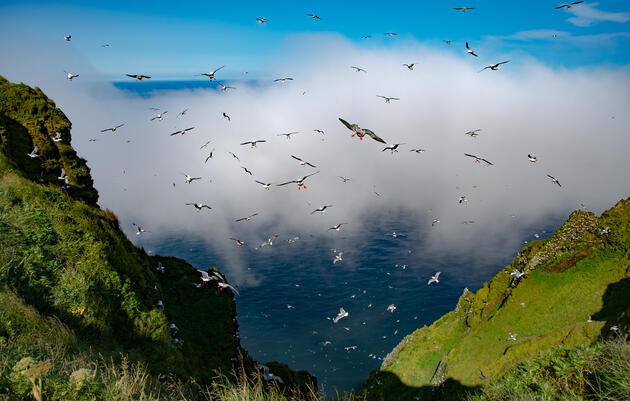
The State of Alaska has a land mass of more than 365 million acres, 47,000 miles of marine shoreline, 100,000 glaciers, more than 3 million lakes and rivers, and a diversity of habitats that range from temperate rainforest to Arctic tundra. Alaska also has more than 50 million seabirds, 10 million waterfowl, and many species of breeding birds that breed nowhere else in the U.S. (e.g., Surfbird) or that are global endemics (e.g., Bristle-thighed Curlew).
So it shouldn’t be surprising that Alaska contains 145 official IBAs, the majority of which are globally or continentally significant. In fact, Alaska has almost half of all globally significant IBAs identified in the United States so far. And Alaska’s IBA list will keep growing as we continue to collect new data from across the state.
READ MORE about Alaska’s IBAs
VIEW ALL ALASKA IBAs and read site descriptions for each area
SEARCH the national IBA database by species, site name, habitat type, etc.
DONATE NOW to support Audubon's conservation work in Alaska.
Bering Sea Project
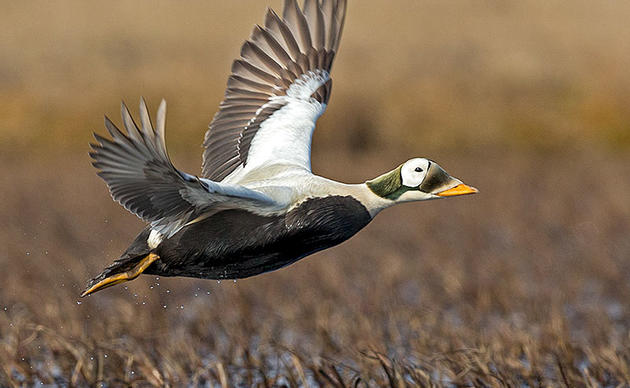
In 2000, in cooperation with the Russian Union for Bird Conservation and the Asia Council of BirdLife International, Audubon Alaska initiated a project to identify marine and coastal IBAs on both the Alaskan and Russian sides of the Bering Sea. The initial list of proposed IBAs included more than 150 sites, although for some sites, especially on the Russian side, information was limited and dated. A technical committee composed of Russian cooperators, U.S. Fish and Wildlife Service biologists, and others reviewed the proposed sites. This resulted in approximately 90 sites being recognized as IBAs (~50 in Alaska and ~40 in Russia). These sites include coastal nesting grounds for about 90% of the world population of Emperor Geese, staging areas for tens of thousands of Bar-tailed Godwits, the ice-bound, at-sea wintering area for many of the world's Spectacled Eiders, and seabird colonies and adjacent marine waters where hundreds of thousands of Crested Auklets and other Beringian endemic species nest and forage.
Cook Inlet Project
In October 2001, Audubon Alaska initiated a second IBA project in the Cook Inlet watershed of south-central Alaska. Based on information provided by wildlife agencies, Audubon chapters, major landowners, and others in the Cook Inlet area, a total of 24 sites were proposed. The national IBA technical committee reviewed these sites and recognized 22 of them as IBAs. These sites include the nesting grounds of almost the entire population of the Tule race of the Greater White-fronted Goose, tide flats where almost the entire population of the Pribilof Island race of the Rock Sandpiper overwinters, and seabird colonies where hundreds of thousands of Common Murres nest.
For further information on the Important Bird Areas Program in Alaska, contact:
Dr. Iain J. Stenhouse
Director of Bird Conservation
Audubon Alaska
715 L Street, Suite 200
Anchorage, AK 99501
907.276.7034….phone
907.276.5069….fax
istenhouse@audubon.org
|